
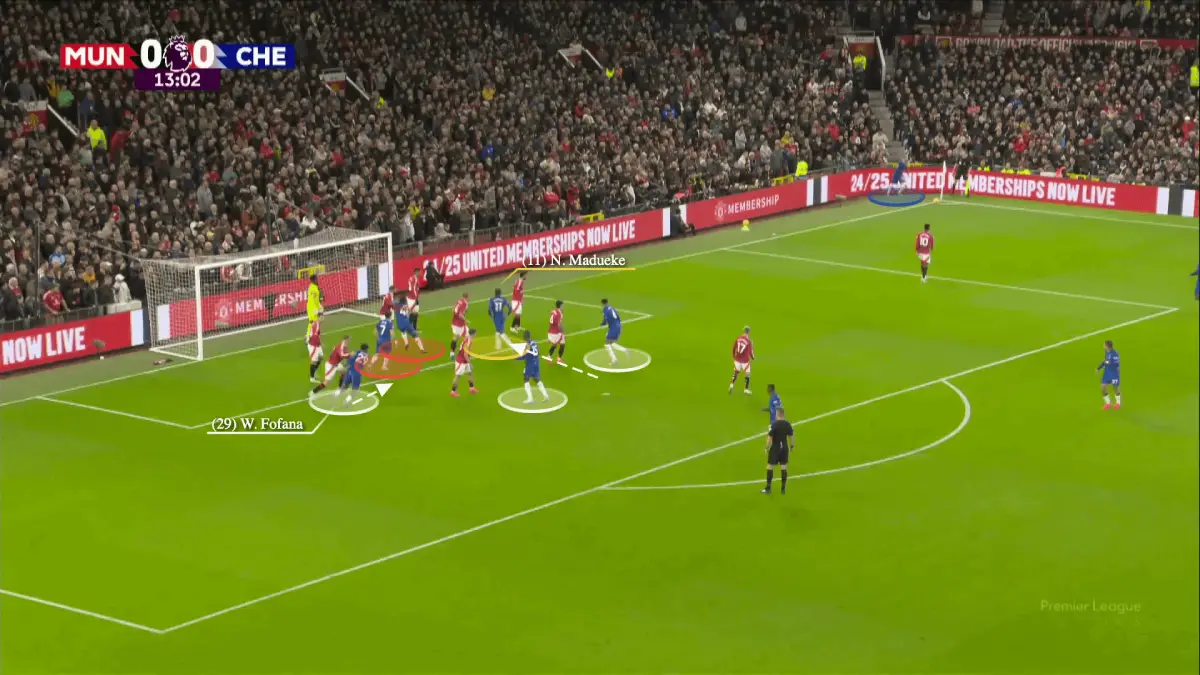

In the modern era of elite football, the difference between a title-winning season and a mid-table finish often comes down to the finest of margins. As we progress through the 2025/26 Premier League season, one tactical trend has emerged as a primary weapon for the league’s top contenders: the sophisticated exploitation of dead-ball situations. Specifically, the way the Reds exploit corner kicks has become a masterclass in blending data science with physical execution.
Under the guidance of Arne Slot, Liverpool Football Club has undergone a quiet revolution. While the “heavy metal football” of the previous decade prioritized transition speed, the current “Reds” era is defined by calculated, high-efficiency set-piece routines that leave defenders questioning their own positioning.
In this deep dive, we break down the mechanics of how the Reds exploit corner kicks, the role of Artificial Intelligence in their preparation, and why these routines are so difficult to defend.
The Tactical Shift: From Chaos to Calculation
For years, corners were often seen as a game of “win the header.” However, the 2025/26 season has seen a shift toward manipulation. The goal is no longer just to find a tall player; it is to create a specific space that can be exploited by a late runner.
The “Gravity” Effect
When the Reds line up for a corner, they often cluster their tallest players—such as Virgil van Dijk and Ibrahima Konaté—in a single zone. This creates a “gravity” effect, pulling the opposition’s best aerial defenders into one compact space.
By concentrating the defensive threat, the Reds create “islands” of space elsewhere in the box. This is the foundation of how the Reds exploit corner opportunities: they don’t fight for the space that is already occupied; they create new space through movement.
Using AI and “TacticalAI” to Gain an Edge
One of the most significant developments at Anfield recently has been the integration of Google DeepMind’s TacticalAI. This system has analyzed over 7,000 corner kicks from previous Premier League seasons to predict which routines have the highest probability of resulting in a shot on target.
How it Works:
- Pattern Recognition: The AI identifies how specific opponents (like Manchester City or Arsenal) set up their zonal marking.
- Predictive Modeling: It suggests the optimal delivery type—whether it be an inswinger to the near post or a lofted ball to the “D.”
- Real-time Adaptation: Coaches use these insights to tweak routines mid-match based on how the opponent is reacting.
When we say the Reds exploit corner routines, we aren’t just talking about luck. We are talking about a strategy backed by the most advanced algorithms in sports history.
Key Personnel: The Architects of the Routine
A strategy is only as good as the players executing it. In the 2025/26 campaign, several key figures have been instrumental in ensuring the Reds exploit corner situations effectively.
| Player | Role in Corner Routine | Key Attribute |
| Trent Alexander-Arnold | Primary Taker | Elite whip and precision delivery. |
| Virgil van Dijk | The Distractor / Target | Aerial dominance and “gravity” in the box. |
| Dominik Szoboszlai | The Edge Specialist | Long-range threat from cleared balls. |
| Alexis Mac Allister | The “Second Ball” Winner | Anticipation and positioning on rebounds. |
The Role of the Delivery
The Reds exploit corner zones primarily through inswinging deliveries. By curling the ball toward the goal, they force the goalkeeper to make a split-second decision: stay on the line and risk a tap-in, or come for the ball and risk being blocked by a “screener.”
The “Blocker” and the “Screener”
A controversial but effective tactic used by the Reds involves the use of “screeners.” While the rules against impeding a goalkeeper are strict, the Reds have mastered the art of legal screening.
By positioning a player like Cody Gakpo or Darwin Núñez just in front of the keeper, they limit his mobility. This doesn’t require a foul; it simply requires occupying the space the keeper wants to move into. As the delivery comes in, the screen moves, leaving the keeper a fraction of a second late to react to the header. This “split-second delay” is exactly how the Reds exploit corner setups against world-class goalkeepers.
Read also this: Discord Fonts
Defending the Counter: The “Rest Defense”
Exploiting a corner isn’t just about scoring; it’s about not conceding on the break. Arne Slot’s Liverpool uses a 3-1 rest defense structure during corners.
- Three defenders stay back near the halfway line.
- One midfielder (often Gravenberch or Mac Allister) sits at the edge of the box to recycle possession or foul tactically if a counter-attack starts.
This balance ensures that while the Reds exploit corner kicks offensively, they remain structurally sound defensively.
Case Study: The Goal Against Arsenal (Oct 2025)
In one of the most talked-about moments of the season, Liverpool scored a decisive goal from a corner that perfectly illustrated these tactics.
- The Set-up: Van Dijk and Konaté started at the back post.
- The Decoy: As Alexander-Arnold raised his arm, both big men charged toward the near post, dragging four Arsenal defenders with them.
- The Exploit: Florian Wirtz (a 2025 signing) hovered at the edge of the box, unnoticed.
- The Finish: The ball was played low to the “D,” where Wirtz arrived unmarked to finish into the bottom corner.
This routine proved that the Reds exploit corner kicks by thinking three steps ahead of the defense.
How to Train the Reds Exploit Corner Routine
If you are a coach looking to replicate this success, the training ground is where the magic happens. Liverpool focuses on:
- Synchronization: Timing the runs so that the space is vacated exactly as the ball enters the zone.
- Variation: Never using the same routine more than twice in a match.
- Second Ball Drills: Practicing what happens if the first header is cleared. Statistics show that the Reds are 40% more likely to score from a “second phase” corner than a direct one.
Conclusion: The New Frontier of Football
The Reds exploit corner has become synonymous with tactical ingenuity. By combining the physical prowess of their squad with cutting-edge AI and meticulous movement patterns, Liverpool has turned a standard set piece into a high-percentage scoring opportunity.
As the season progresses, opposition managers will undoubtedly try to find an antidote to these routines. However, with the ability to vary their approach and leverage data in real-time, the Reds remain the gold standard for set-piece execution in 2026.
For more related topics: https://mirsft.com/