
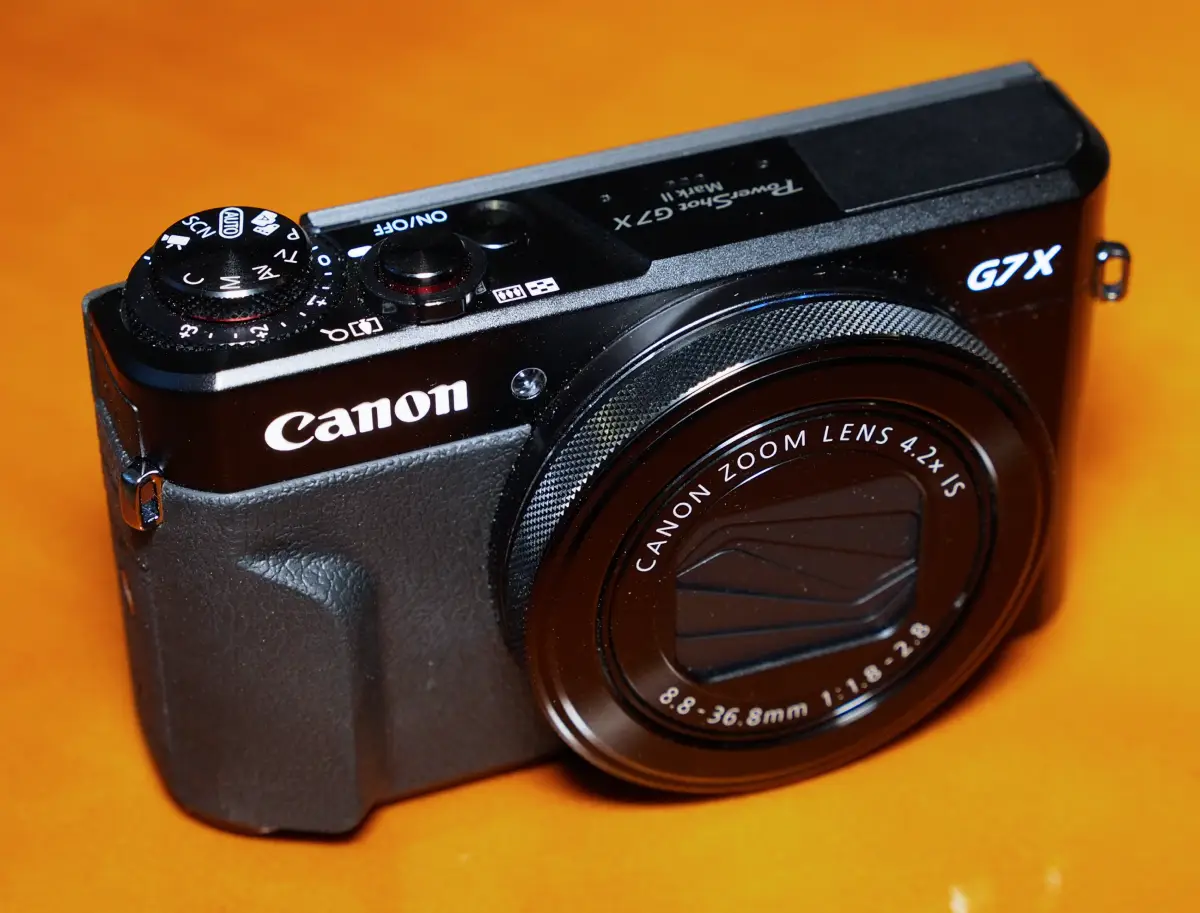

Introduction: The Undisputed King of Compact Vlogging
In the fast-paced world of digital content creation, gear comes and goes. However, few cameras have maintained a “cult-like” status as long as the Canon PowerShot G7X Mark II. Even in 2025, as 8K video and AI-driven autofocus dominate the headlines, this pocket-sized powerhouse remains a staple in the kits of YouTubers, travel enthusiasts, and street photographers.
But what makes a camera released years ago still so relevant today? Is it the legendary “Canon Color Science,” the ultra-bright f/1.8 lens, or the tactile feel that a smartphone simply cannot replicate? In this comprehensive review, we’ll explore every corner of the Canon G7X Mark II to help you decide if it’s the right investment for your creative journey this year.
Key Specifications at a Glance
Before we dive into the performance, let’s look at the hardware that powers this compact beast:
| Feature | Specification |
| Sensor | 20.1 Megapixel 1.0-inch CMOS |
| Processor | DIGIC 7 |
| Lens | 24-100mm (4.2x Optical Zoom) |
| Aperture | f/1.8 (W) – f/2.8 (T) |
| Video | Full HD 1080p at 60 fps |
| ISO Range | 125 – 12,800 |
| LCD | 3.0″ Tilting Touchscreen (1.04m dots) |
| Connectivity | Wi-Fi, NFC, Bluetooth |
| Weight | Approx. 319g (including battery) |
Why the Canon G7X Mark II is Still Popular in 2025
Exceptional Image Quality with a 1-Inch Sensor
While most smartphones now boast “100-megapixel” sensors, the physical size of the sensor in the G7X Mark II—a 1.0-inch CMOS—is significantly larger than what you’ll find in almost any phone. This larger surface area allows the camera to capture more light, providing a wider dynamic range and much cleaner images in low-light environments.
The Power of f/1.8 and Natural Bokeh
One of the biggest draws of this camera is its bright f/1.8–2.8 aperture. For vloggers, this means you can achieve a soft, blurred background (bokeh) naturally, without the glitchy edges often seen in “Portrait Mode” software on phones. The 24-100mm focal range is incredibly versatile, taking you from wide-angle landscapes to tight, flattering portraits with a flick of the zoom lever.
The “Vlogger-Friendly” Flip Screen
The 180-degree upward tilting touchscreen was a game-changer upon release and remains its most loved physical feature. It allows you to frame yourself perfectly while talking to the camera, and the responsive touch interface makes shifting focus as simple as tapping your face on the screen.
Pros and Cons: A Balanced Perspective
Pros
- Portability: Truly pocket-sized; fits into a jacket pocket or small bag easily.
- Build Quality: Solid metal chassis that feels premium and durable.
- Intuitive Controls: The physical control ring around the lens allows for quick adjustments to aperture or shutter speed.
- In-Camera ND Filter: A built-in 3-stop Neutral Density (ND) filter lets you shoot with wide apertures even in bright sunlight.
- Color Science: Beautiful, warm skin tones straight out of the camera (SOOC) that require minimal editing.
Cons
- No 4K Video: Limited to 1080p Full HD (though many argue 1080p is still the standard for vlogging).
- No External Mic Jack: You are reliant on the built-in stereo mics or an external recorder.
- Autofocus Technology: Uses contrast-detection AF, which is slower than the newer “Dual Pixel” AF found in the Mark III.
- Battery Life: Rated for about 240-260 shots; carrying a spare is mandatory for a full day of shooting.
Read also this: Pandabuy Spreadsheet
Canon G7X Mark II vs. Mark III: Which Should You Choose?
The inevitable question for any buyer is whether to save money on the Mark II or upgrade to the Mark III.
- Choose the Mark II if: You are on a budget and primarily care about photography and “standard” vlogging. The Mark II is often praised for having a more reliable autofocus for still photography than the early firmware of the Mark III.
- Choose the Mark III if: You absolutely need 4K video, a microphone input, or the ability to live stream directly to YouTube.
Note: Many professional vloggers actually prefer the Mark II because it tends to run cooler (less overheating) during long 1080p recording sessions compared to the 4K demands of the Mark III.
Top 5 Accessories to Level Up Your G7X Mark II
To get the most out of your camera, consider these essential add-ons:
- Spare NB-13L Batteries: You will run out of juice. Keep at least two spares.
- Manfrotto PIXI Mini Tripod: The gold standard for handheld vlogging stability.
- SanDisk Extreme Pro SD Card: Ensure your write speeds can keep up with 60fps video and 8fps burst photos.
- MegaGear Leather Case: Provides protection while giving the camera a stylish, retro aesthetic.
- Wind Muff (Deadcat): Since there is no mic jack, stick-on windshields for the internal mics are a lifesaver for outdoor shooting.
Professional Tips for Better Video
Even without 4K, you can make your G7X Mark II footage look like a million bucks:
- Shoot in “Standard” or “Faithful” Picture Style: Lower the contrast and saturation slightly in-camera to give yourself more flexibility when color grading.
- Use the Control Ring: Set the front ring to adjust your aperture so you can quickly change your depth of field.
- Manual White Balance: Don’t rely on Auto White Balance (AWB) if the lighting is tricky; setting it manually prevents the “color shifting” common in vlogs.
Final Verdict: Is it Worth It in 2025?
The Canon G7X Mark II is no longer the “newest” kid on the block, but it remains one of the most capable. For the price—especially if you can find one refurbished or used—it offers a level of image quality and “feel” that smartphones still struggle to match.
If you want a camera that makes you feel like a photographer, fits in your pocket, and produces those classic, glowing Canon colors, the G7X Mark II is still a fantastic choice in 2025. It’s a testament to the fact that good glass and a solid sensor never truly go out of style.
For more related topics: https://mirsft.com/