
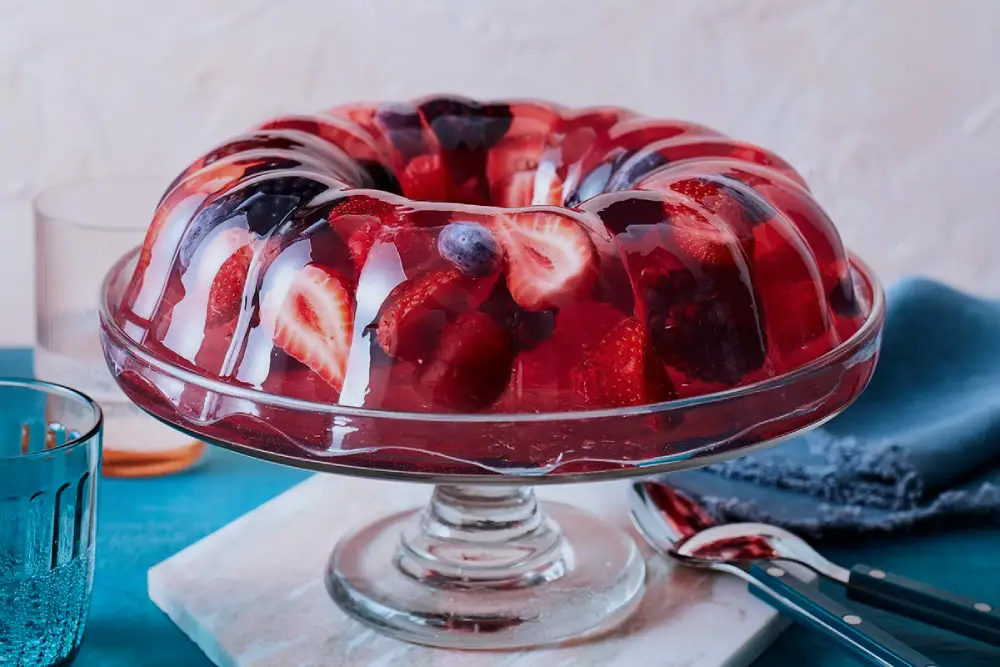

There is something deeply nostalgic about a shimmering jar of homemade jelly sitting on a sunlit kitchen counter. Unlike store-bought preserves that are often loaded with high-fructose corn syrup and artificial dyes, homemade jelly captures the pure, vibrant essence of the fruit.
At RecipesJelly.com, we believe that jelly-making is both a science and an art. Whether you are a seasoned canner or a curious beginner, understanding the delicate balance of fruit, acid, sugar, and pectin is the key to achieving that perfect “wobble.” In this comprehensive guide, we will walk you through everything you need to know to turn your favorite fruits into liquid gold.
1. The Science of the “Set”: Pectin, Acid, and Sugar
To make jelly at home, you aren’t just cooking fruit; you are performing a chemical reaction. For a liquid to transform into a gel, three components must work in harmony:
Pectin
Pectin is a naturally occurring starch found in the cell walls of fruits. When heated with sugar and acid, it forms a mesh-like structure that traps liquid. Some fruits, like tart apples and blackberries, are naturally high in pectin. Others, like strawberries and peaches, need a little help from commercial pectin (available at www.recipesjelly.com tips sections).
Acid
Acid is the “activator.” It helps the pectin molecules bind together. If your fruit isn’t acidic enough, your jelly will stay syrupy. This is why many recipes call for a splash of lemon juice. The ideal acidity for jelly usually sits at a $pH$ level of approximately:
$$pH \approx 3.0 – 3.5$$
Sugar
Sugar does more than just sweeten. It acts as a preservative and, more importantly, it attracts water molecules away from the pectin, allowing the pectin chains to bond.
2. Essential Equipment for Your Jelly Kitchen
Before you start your first batch on RecipesJelly.com, ensure you have these tools ready. Having the right gear prevents “jelly panic” when the mixture reaches its boiling point.
- A Large, Heavy-Bottomed Pot: Jelly bubbles up significantly. Use a pot that is at least three times the volume of your liquid.
- A Jelly Bag or Cheesecloth: To get that crystal-clear transparency that defines jelly (as opposed to jam), you must strain the fruit pulp without squeezing it.
- Candy Thermometer: Precision is key. Jelly typically sets at $220°F$ ($104°C$) at sea level.
- Canning Jars and Lids: Ensure they are sterilized and free of cracks.
- Magnetic Lid Lifter and Jar Tongs: For safety when dealing with boiling water baths.
3. Step-by-Step: The Master Jelly Recipe
This method can be adapted for almost any fruit juice, from classic concord grape to adventurous jalapeño.
Phase 1: Extracting the Juice
- Prep the Fruit: Wash your fruit and remove stems. For larger fruits like apples, chop them into small pieces (keep the skins and cores, as they contain the most pectin!).
- Simmer: Place fruit in a pot with just enough water to cover it. Simmer until the fruit is soft and has released its color and juice.
- The Drip: Pour the mixture into a jelly bag suspended over a bowl. Pro Tip from RecipesJelly.com: Never squeeze the bag! Squeezing forces pulp through the mesh, resulting in cloudy jelly. Let it drip naturally for at least 4 hours or overnight.
Phase 2: The Boil
- Measure: Measure your strained juice. A standard ratio is usually 1 cup of juice to $3/4$ cup of sugar.
- Combine: Place juice and lemon juice into your large pot. If using powdered pectin, add it now.
- The Rolling Boil: Bring to a boil that cannot be stirred down.
- Add Sugar: Stir in the sugar all at once. Bring it back to a hard boil.
- The Test: Boil until you reach the “sheeting point” (when the liquid drops off a cold metal spoon in a single sheet rather than individual drops) or until your thermometer reads $220°F$.
Read also this: Jujutsu Kaisen Manga Online
4. Troubleshooting Common Jelly Failures
Even the best chefs at www.recipesjelly.com occasionally encounter a batch that doesn’t go as planned. Here is how to fix common issues:
My Jelly Won’t Set (It’s Syrupy)
- The Cause: Not enough pectin, too much water, or not enough acid.
- The Fix: You can often “re-cook” the jelly. Add a little more lemon juice and a small amount of whisked-in pectin, then bring it back to a boil for 2–3 minutes.
My Jelly is Too Hard or Rubbery
- The Cause: Overcooking or using too much pectin.
- The Fix: While you can’t “undo” a hard set easily, you can melt it down and use it as a glaze for meats or a topping for warm brie.
There are Bubbles or Foam on Top
- The Cause: Air trapped during the boiling process.
- The Fix: Before pouring into jars, use a cold metal spoon to “skim” the foam off the top. Adding a half-teaspoon of butter during the boil can also reduce foaming.
5. Unique Flavor Profiles to Try
While grape and strawberry are classics, RecipesJelly.com encourages you to experiment with modern flavor infusions:
| Jelly Type | Best Pairing | Secret Ingredient |
| Spiced Apple | Pork Chops or Toast | Cinnamon sticks & Star Anise |
| Wine Jelly | Cheese Platters | A crisp Rosé or deep Merlot |
| Hot Pepper | Cream Cheese & Crackers | Red chili flakes & Apple Cider Vinegar |
| Earl Grey Tea | Scones | High-quality loose leaf tea infusion |
6. Low-Sugar and No-Sugar Alternatives
In today’s health-conscious world, many are looking to reduce their sugar intake. Traditional pectin requires high sugar concentrations to bond. However, you can find Low-Methoxyl Pectin which reacts with calcium instead of sugar.
This allows you to create delicious jellies using honey, maple syrup, stevia, or simply the natural sweetness of the fruit. At RecipesJelly.com, we recommend adding a bit of calcium water (usually included with low-sugar pectin brands) to ensure a firm set without the sugar overload.
7. Storage and Safety
Food safety is paramount when canning. Always use the Water Bath Canning method for high-acid fruits:
- Fill sterilized jars, leaving $1/4$ inch of headspace.
- Wipe the rims clean (any residue will prevent a seal).
- Apply lids and bands until “finger-tight.”
- Process in boiling water for 5–10 minutes (adjust for altitude).
- Listen for the “pop!”—that satisfying sound means your jar is vacuum-sealed and shelf-stable for up to a year.
Conclusion: Join the RecipesJelly.com Community
Making your own jelly is a rewarding journey that connects you to the seasons and provides a creative outlet in the kitchen. There is no better feeling than gifting a jar of “Summer in a Jar” to a friend or neighbor.
For more detailed recipes, video tutorials, and the latest in preserving technology, be sure to visit us at www.recipesjelly.com. We are dedicated to helping you fill your pantry with the finest, clearest, and most delicious jellies imaginable.
For more related topics: https://mirsft.com/